Identification #
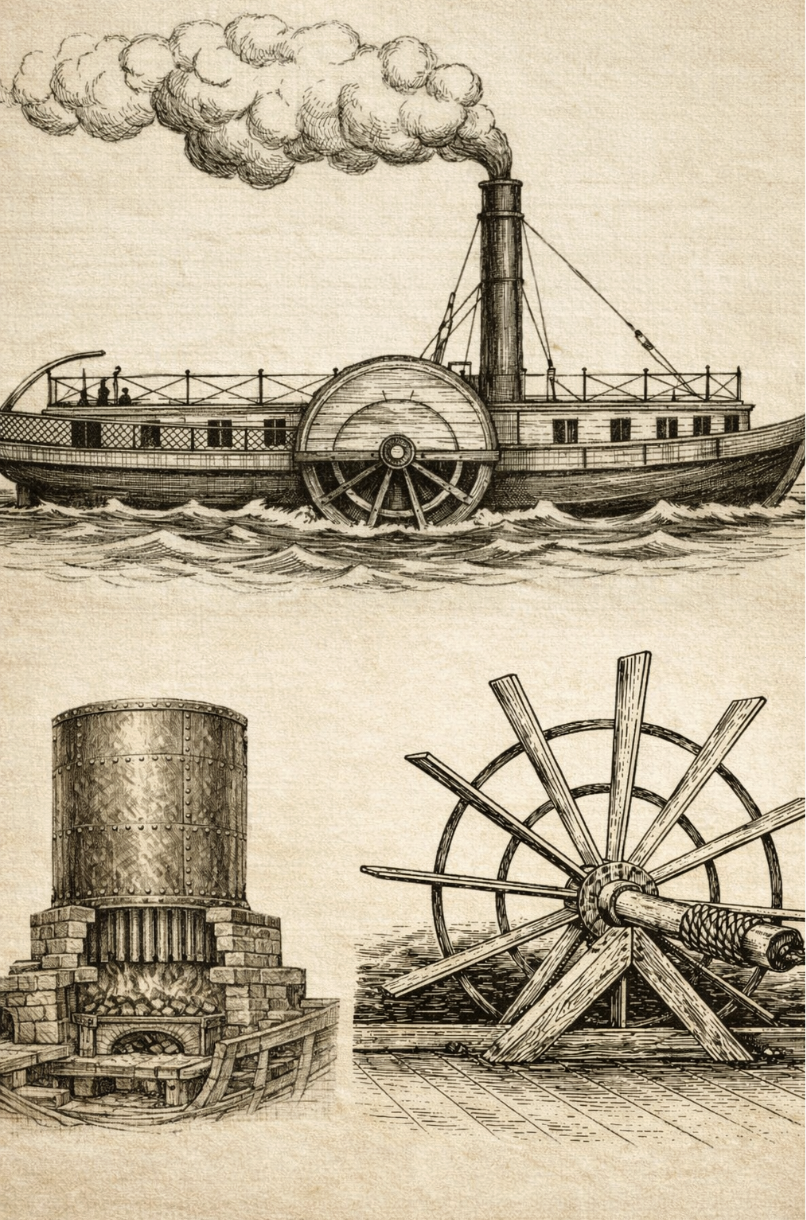
Steamboats represent the logistical peak of the Picentian industrial state. These vessels retrofitted traditional Roman merchant hulls with mechanized side paddle wheels powered by massive Class B oscillating-cylinder steam engines.
Description #
The primary design features a central engine room housing a multi-flue fire-tube boiler. A large, horizontal crankshaft drives two wooden paddle wheels mounted on the sides of the hull. This configuration allowed the vessels to maintain consistent speeds regardless of wind conditions and to navigate shallow coastal waters and rivers that were inaccessible to traditional deep-keel sailing ships.
Provenance #
Developed in the summer of 80 AD by the House of Gaius, the first steamers were intended to solve the "Commodity Trap"—the inability to move massive industrial yarn and cloth stockpiles through the bandit-infested and tax-heavy road networks of Campania.
Function/Operation #
- Propulsion: 40–80 hp Class B engines driving side paddles at 40–90 RPM.
- Logistical Advantage: Allowed for "24/7" trade routes, bypassing the slow and expensive Imperial road infrastructure.
- Strategic Impact: The ability of these boats to reach global markets directly made the House of Gaius economically untouchable by local rivals, eventually forcing the Imperial center to send the Procurator to intervene.
Scholarship/Variants #
The archives describe the "Engine of Empire" as being the heart of these ships, often requiring a full-time crew of stokers and mechanics to manage the temperamental high-pressure boilers. The sight of smoking funnels alongside traditional marble ports became the defining visual of the Engine Era.