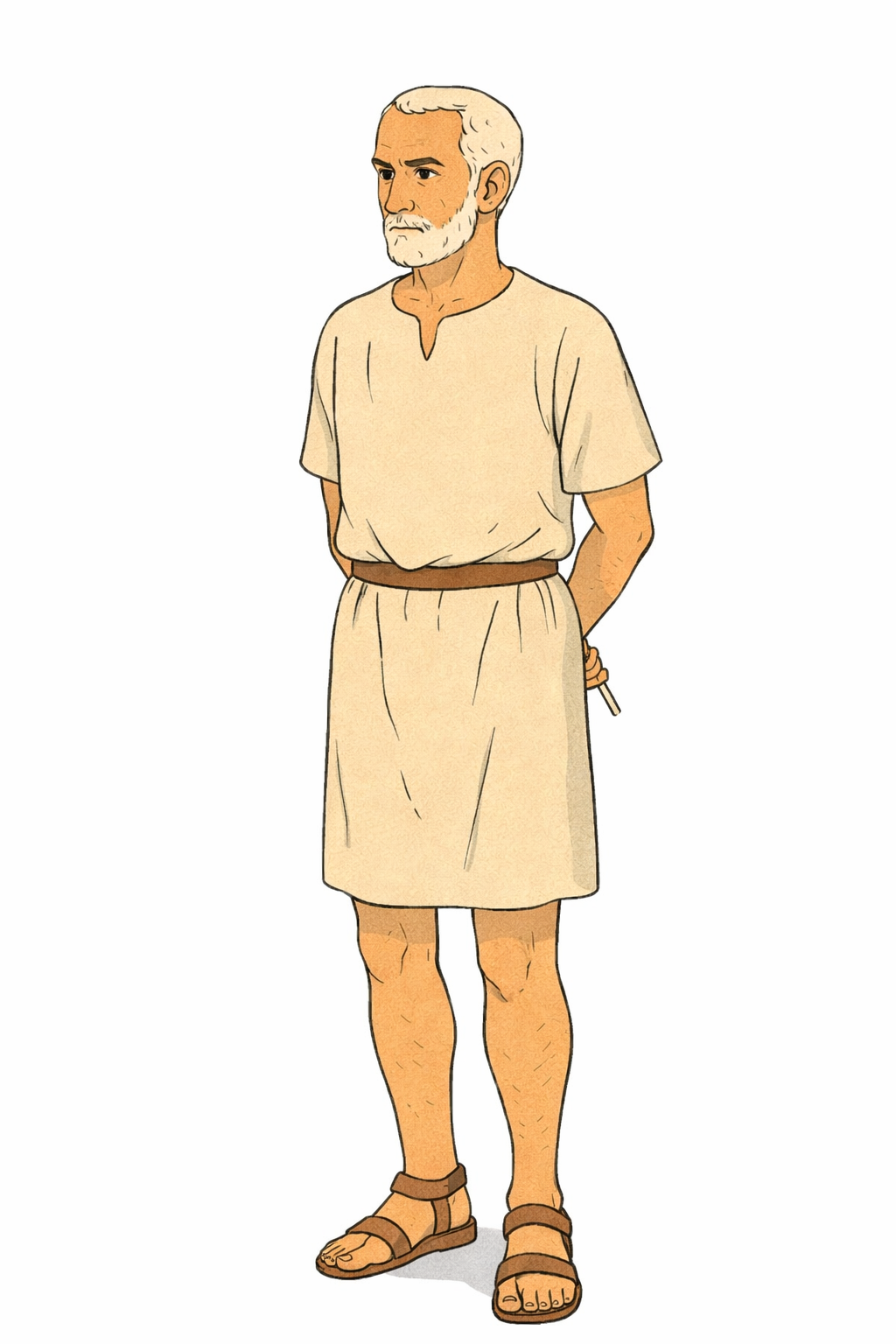
Snapshot #
Marcus is the ancient-era deuteragonist of the Lydian Stone narrative. A literate household slave and tutor of Greek descent living in the Villa of Gaius Calidius, he discovered the ancient end of the Lydian Stone connection. He is characterized by his statuesque posture, his calculating intellect, and his evolution from a survivor into a shrewd negotiator for his people's future.
Biography #
Marcus spent the majority of his life as a respected but subservient slave, teaching the children of Gaius Calidius. In 79 AD, he established contact with Ulysses in the future. Recognizing the value of his knowledge of "current" Pompeii (archival sites, libraries) to a future archaeologist, he began trading coordinates of lost texts for industrial blueprints. This transition allowed him to save his household from economic ruin and eventually lead the defense of Picentia against the Roman Legions.
Roles & Ranks #
- Tutor/Scribe: His initial role in the House of Gaius.
- Industrial Administrator: His de facto role during the Blueprint and Engine eras, overseeing factory operations.
- Strategist: His role in the later resistance against Rome.
Relationships #
- Ulysses: His modern counterpart. Marcus views him with a mix of gratitude and pragmatic skepticism, leveraging their connection to obtain superior technology.
- Gaius Calidius: His owner and later partner in industry. Marcus provided the "brain" to Gaius's "hand."
- Livia: The matron of the house. Marcus served as her technical advisor during her rise to power in the industrial state.
Key Appearances/Events #
- The First Blueprint Exchange (79 AD): The moment he realized the past could be changed through information.
- The Recovery of the Lost Aeneid: A key moment where he guided Ulysses to a hidden library to build trust.
- The Siege of Picentia (81 AD): Standing at the gates, asking the future for a "final solution" to the Roman threat.