Snapshot #
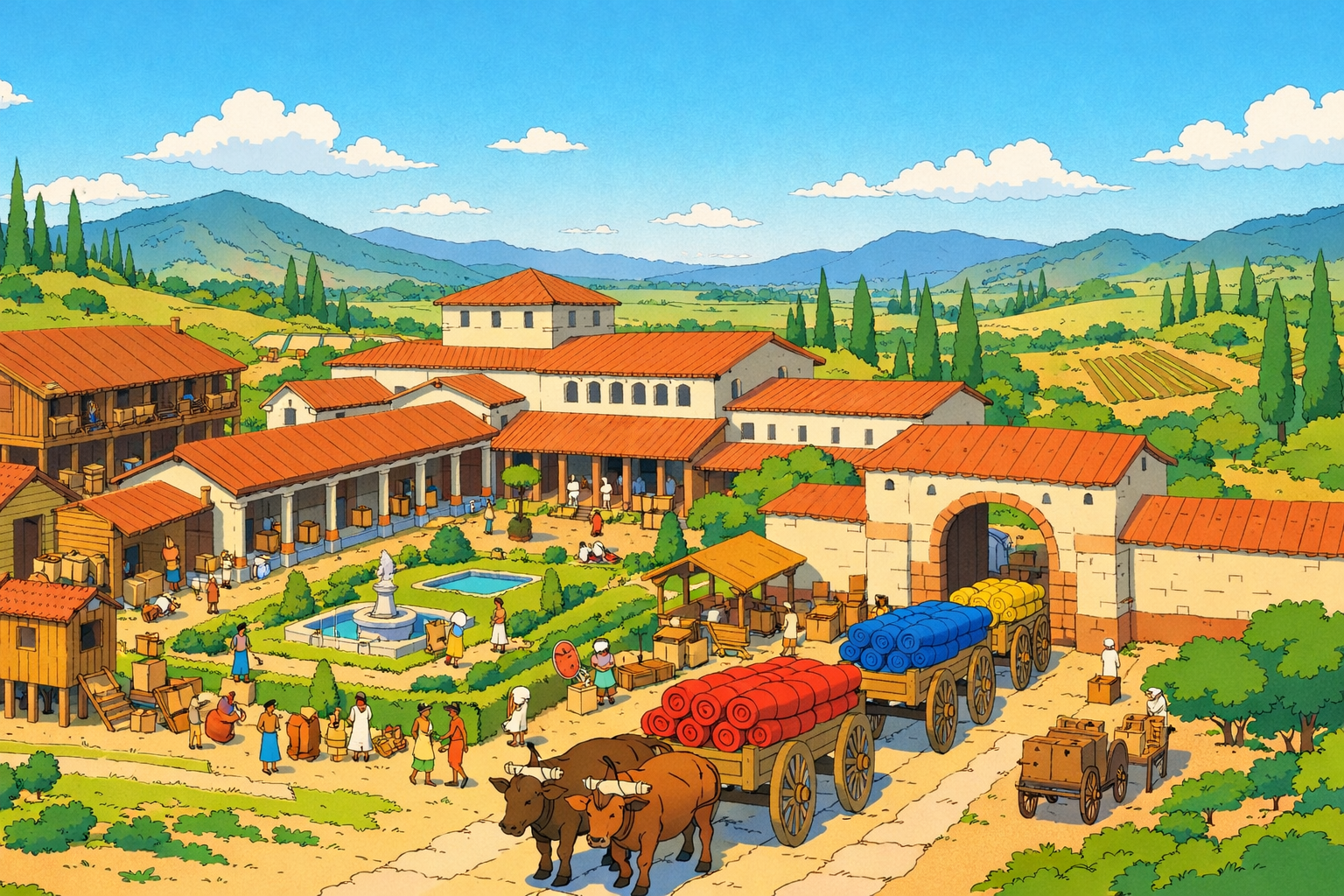
Picentia is a Roman town in the Campania region, historically recognized as the "Wool Capital" due to its extensive network of warehouses and sorting yards. Following the eruption of Vesuvius in 79 AD, it became the epicenter of an accelerated industrial revolution, evolving from a traditional textile hub into a mechanized regional power.
Geography #
Located on the Tyrrhenian coast, Picentia's geography is defined by ash-dusted cliffs and a simple wooden dock that juts into the sea. The surrounding hills are ideal for sheep grazing, though they became grey with volcanic ash during the divergence.
Governance #
Initially governed by a traditional Chief Magistrate and a council of 16 noble houses, the town's governance shifted toward a de facto industrial state led by the House of Gaius and the Picentian Nobles. By 80 AD, the commercial elite had become the "only law" in Picentia.
Infrastructure #
- The Factory Warehouses: Traditional storage facilities retrofitted with mechanized looms and line shafts.
- The Industrial Docks: Bustling maritime hubs capable of supporting the Picentian Steamboat fleet.
- The City Gates: The site where the heads of the Imperial envoys were spiked in 81 AD, signaling the start of the insurrection.
History #
Following the disaster of 79 AD, Picentia faced economic ruin. The introduction of the Spinning Wheel by the House of Gaius triggered a "Textile Revolution," making Picentia the dominant market force in southern Italy. This was followed by the implementation of steam power and the construction of "Fire Ships," transforming the town into a sovereign industrial entity that openly defied the Roman Empire.
Notable Events #
- The Emergency Council (79 AD): The decision by the 16 houses to stay and rebuild using mechanized labor.
- The Insurrection of Picentia (81 AD): The violent break with Imperial Rome.