Snapshot #
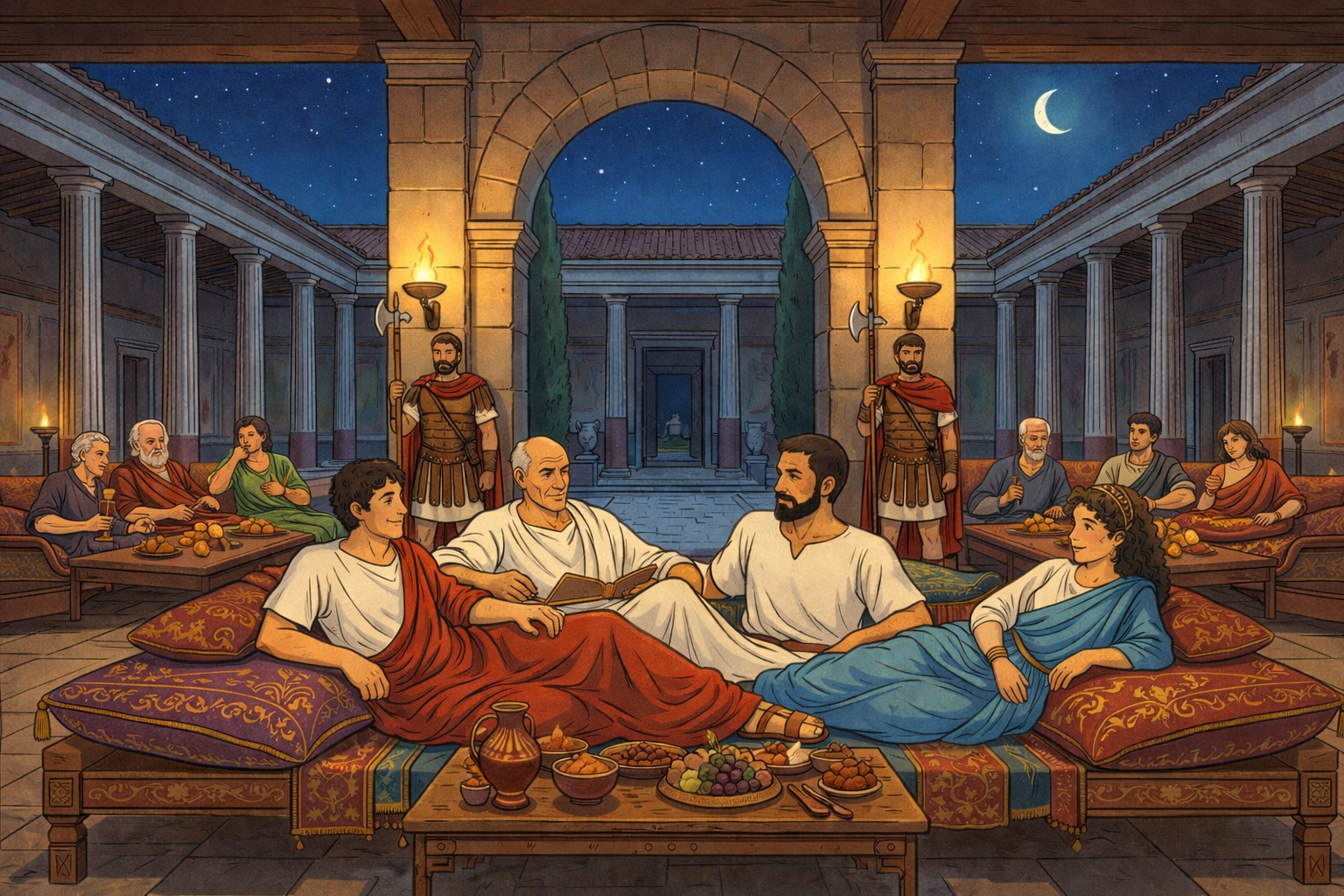
The Villa of Gaius Calidius was a high-status residence in Pompeii belonging to the merchant Gaius Calidius. In the traditional timeline, it was destroyed by Vesuvius. In the divergence, it survived the eruption and became the first site of the Roman industrial revolution, housing the prototype oscillating-cylinder steam engine.
Geography & Architecture #
The villa is a classical Roman structure featuring an open atrium, a peristyle garden, and complex frescoes. Following the divergence, its architecture was retrofitted with industrial infrastructure:
- The Study: A hidden, windowless chamber near the cellar where Marcus kept the Lydian Stone.
- The Engine Room: The converted atrium, where early Class P steam engines were tested.
- The Fullonica: Adjoining laundry and dye works used for textile production.
History #
In 79 AD, the villa served as the meeting place where Marcus convinced Gaius of the impending eruption. Following the evacuation to Picentia, a secondary villa was established as the administrative heart of the House of Gaius. The original Pompeian villa remains a primary archaeological target in the Silent Architect Era.
Notable Events #
- The First Connection (79 AD): The moment Marcus first activated the Lydian Stone in the hidden study.
- The Prototype Test (80 AD): The activation of the first practical steam engine in a Roman residential setting.