Editorial Note #
This text is a compilation of the technical standards and "quality control" instructions drafted by Marcus for the Picentian smiths and engineers. Unlike modern manuals, it uses craft-based metaphors to describe mechanical tolerances.
Text (Selected Fragments) #
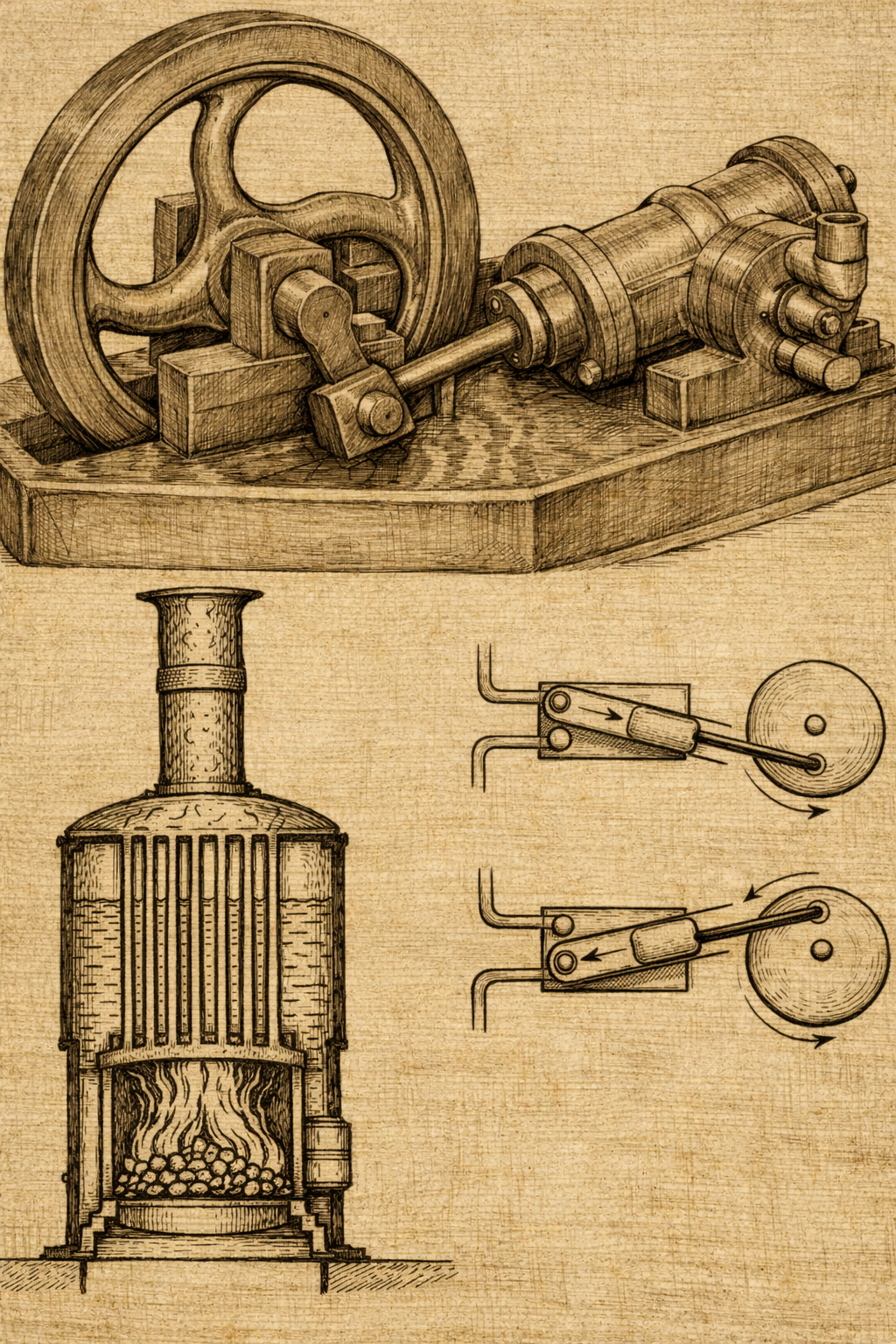
- The Seal of Oil: "The port face must be lapped against the stone until it is flat as a frozen lake. When oiled, the cylinder must cling to the block like a lover's hand, yet move without friction."
- The Piston's Drag: "The bronze piston, wrapped in oiled leather, must drag slightly when pushed. If it falls by its own weight, it is loose; if it requires a hammer, it is a cage."
- The Boiler's Breath: "The boiler must be inspected as a living thing. If a rivet weeps, it must be struck again. The relief plug of lead must remain soft and ready to yield, for if the steam finds no exit, it will create one through the villa walls."
Commentary #
The Engine Doctrine represents the translation of modern thermodynamics into the Roman engineering vernacular. Marcus recognized that he could not teach "psi" or "bar" pressures; instead, he established a culture of safety and precision based on tactile feedback and material limits. This document allowed the House of Gaius to scale from a single prototype to a fleet of marine engines without a catastrophic failure.
Provenance #
Fragments of these instructions were found carbonized in the archives of the Villa of Gaius during the 2026 excavation.